
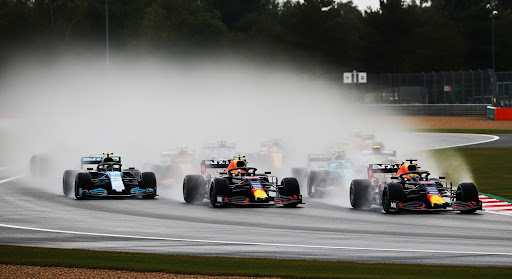
When dark clouds loom over a Formula One circuit, the excitement reaches fever pitch. Wet weather racing separates the good from the great, creating some of the most memorable moments in F1 history.
The Challenge of Wet Weather
Racing in wet conditions presents unique challenges. Reduced visibility, decreased grip, and unpredictable track conditions force drivers to adapt their driving style dramatically. The spray from cars ahead creates a visibility barrier that tests even the most experienced drivers.
Technical Adaptations
When racing in wet conditions, F1 cars require significant modifications to perform optimally. Teams equip their cars with specialised wet-weather tires featuring deeper treads for better water displacement. The brake balance needs careful adjustment to account for reduced grip levels, while engine mappings are modified to deliver power more smoothly. Teams also increase the ride height to prevent dangerous aquaplaning situations that could lead to loss of control.
Driving Techniques
Success in wet conditions demands a complete transformation of the driving approach. Drivers must maintain exceptionally smooth inputs on both throttle and steering, while constantly seeking alternative racing lines to avoid standing water. Braking points move significantly earlier compared to dry conditions, and drivers must pay extra attention to weight transfer management to maintain car stability.
Notable Wet Weather Specialists
Throughout F1 history, certain drivers have excelled in wet conditions. Ayrton Senna’s legendary performance at the 1984 Monaco Grand Prix and Michael Schumacher’s mastery of wet tracks have set the benchmark for rain racing excellence.
Safety Considerations
Safety in wet-weather racing requires comprehensive protocols to protect all participants. Race control closely monitors conditions, deploying the Safety Car during heavy rain periods and conducting regular track inspections for dangerous levels of standing water. In extreme conditions, red flag procedures may be implemented to temporarily halt the race until conditions improve.
Strategic Elements
Rain adds another layer of strategic complexity to F1 races. Teams must carefully monitor weather radar systems and make split-second decisions about tire choices and pit stop timing. The difference between victory and defeat often lies in these crucial strategic calls.
Whether you’re a seasoned F1 fan or new to the sport, wet-weather races provide some of the most thrilling and unpredictable moments in motorsport. They showcase not just driver skill, but the complete package of human ability, technical excellence, and strategic thinking that makes Formula One the pinnacle of racing.
Written by Kate Lynch Belfast