
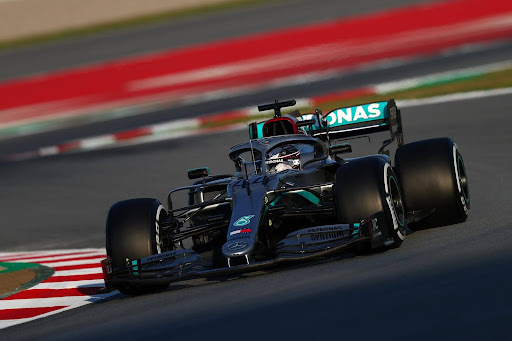
As a die-hard Formula 1 enthusiast, there’s something magical about the British Grand Prix. The smell of rubber on the tarmac, the roar of engines, and the rich history that permeates every corner of Silverstone. Let me take you on a journey through time to explore how this iconic race has evolved over the decades.
The Early Days (1950-1970)
The British Grand Prix holds a special place in Formula 1 history as one of the inaugural races in the first F1 World Championship season in 1950. Held at Silverstone, a former RAF airfield, the first championship race was won by Giuseppe Farina in an Alfa Romeo. King George VI was even in attendance – the only time a reigning monarch has attended a British motor race.
Throughout the 1950s and 1960s, the British Grand Prix alternated between Silverstone, Aintree, and Brands Hatch. This period saw British drivers like Stirling Moss and Jim Clark becoming national heroes, with Clark dominating his home race with five victories.
The Golden Era (1970-1990)
The 1970s and 1980s marked what many consider the golden era of Formula 1. The technological advancements were accelerating, with ground effect aerodynamics and turbo engines revolutionising the sport. British heroes like James Hunt and Nigel Mansell gave fans plenty to cheer about.
Mansell’s victory in 1987 at Silverstone is particularly memorable. After an intense battle with teammate Nelson Piquet, Mansell executed a stunning overtake into Stowe corner that had fans invading the track before the race even finished! The iconic image of Mansell being mobbed by fans remains one of F1’s most enduring moments.
Modern Era and Silverstone’s Renaissance (1990-Present)
By the 1990s, Silverstone had become the permanent home of the British Grand Prix. However, it nearly lost the race in the early 2000s due to facilities falling behind modern standards. A major redevelopment in 2010 secured its place on the calendar, with the stunning Wing pit complex becoming its new centrepiece.
The modern era has been dominated by British drivers once again. Lewis Hamilton has broken numerous records at his home race, surpassing Jim Clark’s record of five wins and currently holding nine British Grand Prix victories – an unprecedented achievement at any Grand Prix.
Engineering Evolution
From an engineering perspective, Silverstone provides a fascinating challenge. Its high-speed corners like Copse, Maggotts, and Becketts sequences test aerodynamic efficiency like few other circuits. The evolution of car design can be traced through performances at Silverstone – from the ground effect cars of the late 70s to today’s highly sophisticated hybrid power units.
The circuit’s layout has undergone numerous changes over the years, but it has maintained its character as one of the fastest and most challenging tracks on the calendar. Engineers and drivers alike will tell you that a car that performs well at Silverstone will generally perform well everywhere.
Memorable Moments
The British Grand Prix has produced countless memorable moments:
- Nigel Mansell giving Ayrton Senna a lift back to the pits after Senna ran out of fuel in 1991
- Michael Schumacher’s controversial win in the pit lane in 1998
- Lewis Hamilton’s dominant drive in torrential rain in 2008
- The dramatic tyre failures of 2013
- Max Verstappen and Lewis Hamilton’s controversial collision at Copse in 2021
Looking Ahead
As Formula 1 continues to evolve with new regulations aimed at closer racing and sustainability, Silverstone remains a cornerstone of the championship. The circuit signed a long-term contract in 2024, securing its place on the calendar until at least 2034.
The British Grand Prix consistently attracts one of the largest and most passionate crowds of the season. With British talents like George Russell and Lando Norris emerging, the future of British representation in the sport looks bright.
For any true Formula 1 fan, attending the British Grand Prix is a pilgrimage – a chance to connect with the sport’s roots while witnessing the cutting edge of automotive technology. It remains the perfect blend of heritage and innovation that makes Formula 1 so special.
Written by Kate Lynch Belfast