
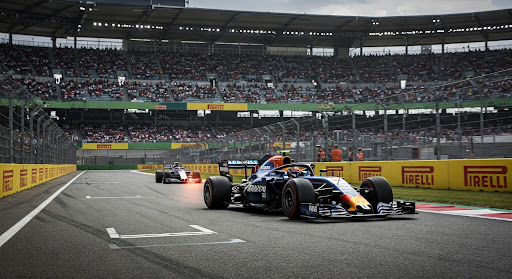
In the high-speed world of Formula One, few technological innovations have transformed racing quite like the Drag Reduction System (DRS). Since its introduction in 2011, this revolutionary system has fundamentally changed how drivers approach overtaking, adding new layers of strategy and excitement to the sport.
Understanding DRS: The Basics
At its core, DRS is an ingenious piece of engineering that allows drivers to temporarily reduce aerodynamic drag by adjusting their rear wing. When activated, a flap opens in the rear wing, reducing downforce and increasing straight-line speed by up to 12-15 km/h – a significant advantage in a sport where milliseconds matter.
However, DRS isn’t a free-for-all speed boost. Its use is carefully regulated to maintain competitive balance. Drivers can only activate DRS when they’re within one second of the car ahead at designated detection points, and only in specific zones on the track.
The Strategic Element
DRS has introduced fascinating strategic considerations to F1 racing. Drivers must now carefully manage their position on track, sometimes deliberately staying just over a second behind their rival through one DRS zone to gain a better attacking position in the next. This chess-like element adds depth to what might otherwise be straightforward battles for position.
Circuit Design and DRS Zones
The placement of DRS zones has become a crucial consideration in modern circuit design. Race directors carefully analyse track layouts to determine optimal locations for these zones, taking into account factors such as:
- Straight length and positioning
- Preceding corner characteristics
- Potential overtaking opportunities
- Safety considerations
Famous circuits like Monza, Spa-Francorchamps, and Silverstone have seen their racing characteristics evolve significantly with the strategic placement of DRS zones.
Impact on Modern Racing
The introduction of DRS has led to a marked increase in overtaking manoeuvres during races. While purists initially criticised the system as “artificial,” it has proven to be a necessary adaptation to modern F1, where high downforce levels and complex aerodynamics can make following other cars closely extremely challenging.
Statistics show that the number of overtakes per race has increased significantly since DRS implementation, creating more dynamic and unpredictable race outcomes.
The Evolution Continues
With the introduction of new technical regulations in 2022, focusing on ground effect aerodynamics, DRS remains an important but perhaps less dominant feature of racing. The new generation of cars can follow each other more closely, leading to more natural overtaking opportunities alongside DRS-assisted passes.
Looking to the Future
As Formula One continues to evolve, the role of DRS may change, but its impact on the sport’s development is undeniable. Whether it remains a long-term solution or serves as a stepping stone to other overtaking aids, DRS has played a crucial role in shaping modern F1 racing.
The system represents a perfect example of how technological innovation can address competitive challenges while adding new strategic elements to the sport. As we look to the future of F1, the lessons learned from DRS will undoubtedly influence the next generation of racing innovations.
What are your thoughts on DRS in Formula One? Has it enhanced the racing spectacle, or would you prefer to see more natural overtaking? Share your opinions in the comments below!
Written by Kate Lynch Belfast