
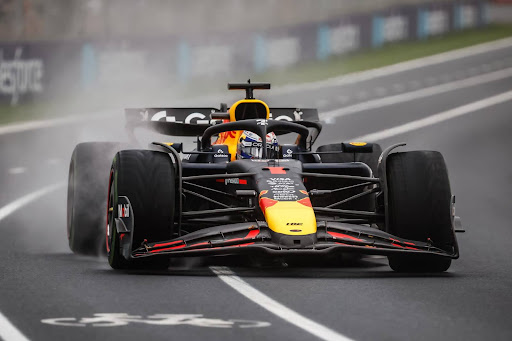
Red Bull Racing has been known for making bold decisions when it comes to their driver lineup, often not hesitating to make changes mid-season if they feel it’s necessary for the team’s performance.
2016: Max Verstappen Replaces Daniil Kvyat
Perhaps the most notable mid-season switch came in 2016 when Red Bull promoted Max Verstappen from Toro Rosso to replace Daniil Kvyat after the Russian Grand Prix. This decision came after Kvyat had a difficult start to the season, particularly after incidents in Russia. Verstappen immediately proved the decision right by winning his first race with Red Bull at the Spanish Grand Prix.
2019: Pierre Gasly and Alexander Albon Swap
During the 2019 summer break, Red Bull made another significant change by demoting Pierre Gasly back to Toro Rosso and promoting Alexander Albon to the main team. Gasly had struggled to match Max Verstappen’s pace in the first half of the season, leading to this switch.
2025: Liam Lawson and Yuki Tsunoda Swap
Possibly one of the most controversial swaps that Red Bull Racing has made is swapping Liam Lawson with Yuki Tsunoda after just two races, especially after the period of time that they kept Sergio Perez in the team when he was drastically underperforming throughout 2024. Fans suspected Yuki would make the step up to the senior team, but Liam was announced. After qualifying at the bottom of the grid in both season races so far this season, team principal Christian Horner made the decision to make the swap. We will see soon enough if that was the correct decision!
The Toro Rosso/AlphaTauri/VCARB Connection
Red Bull’s sister team, VCARB (previously Toro Rosso and AlphaTauri), has often served as both a testing ground for young drivers and a safety net for those who have been demoted from the main team. This unique structure has allowed Red Bull to make these mid-season changes more easily than other teams.
Impact on Driver Development
These mid-season changes have become a trademark of Red Bull’s driver management strategy. While sometimes criticised for being too harsh, this approach has helped them identify and develop exceptional talent like Sebastian Vettel and Max Verstappen.
Red Bull’s willingness to make these bold mid-season changes shows their commitment to immediate performance and their unique approach to driver management in Formula 1. This strategy, while controversial, has contributed to their success as one of the sport’s top teams.
Written by Kate Lynch Belfast