
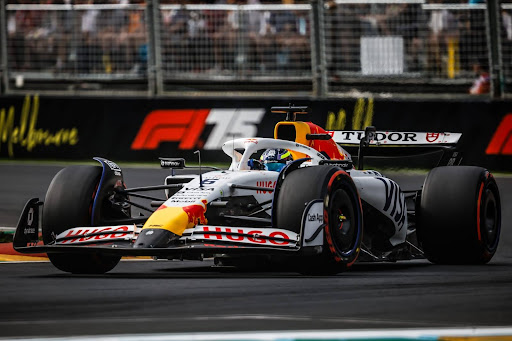
The world of Formula One has always been at the cutting edge of automotive technology, and nowhere is this more evident than in the evolution of its power units. Let’s take a journey through the fascinating transformation of F1 engines, from the mighty V12S to today’s sophisticated hybrid systems.
The Golden Era of V12s (1960s-1990s)
The unmistakable scream of a V12 engine defined Formula One for decades. These mechanical masterpieces, popularised by manufacturers like Ferrari and Honda, were engineering marvels that could reach up to 18,000 RPM. The V12 configuration offered perfect primary and secondary balance, resulting in incredibly smooth power delivery.
Transition to V10s and V8s
As the sport evolved, regulations pushed teams toward smaller, more efficient engines. The V10 era (1995-2005) brought a perfect balance of power and weight, while the subsequent V8 period (2006-2013) focused on standardisation and cost reduction. These changes marked the beginning of F1’s shift toward sustainability.
The Hybrid Revolution (2014-Present)
The introduction of hybrid power units in 2014 represented the biggest technological leap in F1 history. The current power units combine a 1.6-litre V6 turbocharged engine with sophisticated energy recovery systems. The power unit integrates a Motor Generator Unit – Kinetic (MGU-K) that recovers energy during braking, working in tandem with the Motor Generator Unit – Heat (MGU-H), which harvests energy from exhaust gases. These systems feed into an advanced battery energy store that efficiently manages the recovered power.
The Future of F1 Power Units
Looking ahead, F1 is committed to achieving carbon neutrality by 2030. The 2026 regulations will eliminate the complex MGU-H system while increasing electrical power output. This evolution reflects F1’s role in developing sustainable technologies that eventually benefit road cars.
Impact on Road Car Technology
The development of F1 hybrid systems has directly influenced modern road car technology. Features like regenerative braking and hybrid powertrains in today’s sports cars can trace their lineage to F1 innovations.
From the raw power of naturally aspirated V12S to the incredible efficiency of modern hybrid units, F1 power units showcase how motorsport pushes the boundaries of what’s possible in automotive engineering. As we look to the future, this evolution continues, driven by the dual goals of performance and sustainability.
Written by Kate Lynch Belfast